
Lawn Fertilization in Livonia, MI: Why Your Lawn Still Looks Bad and What Actually Fixes It
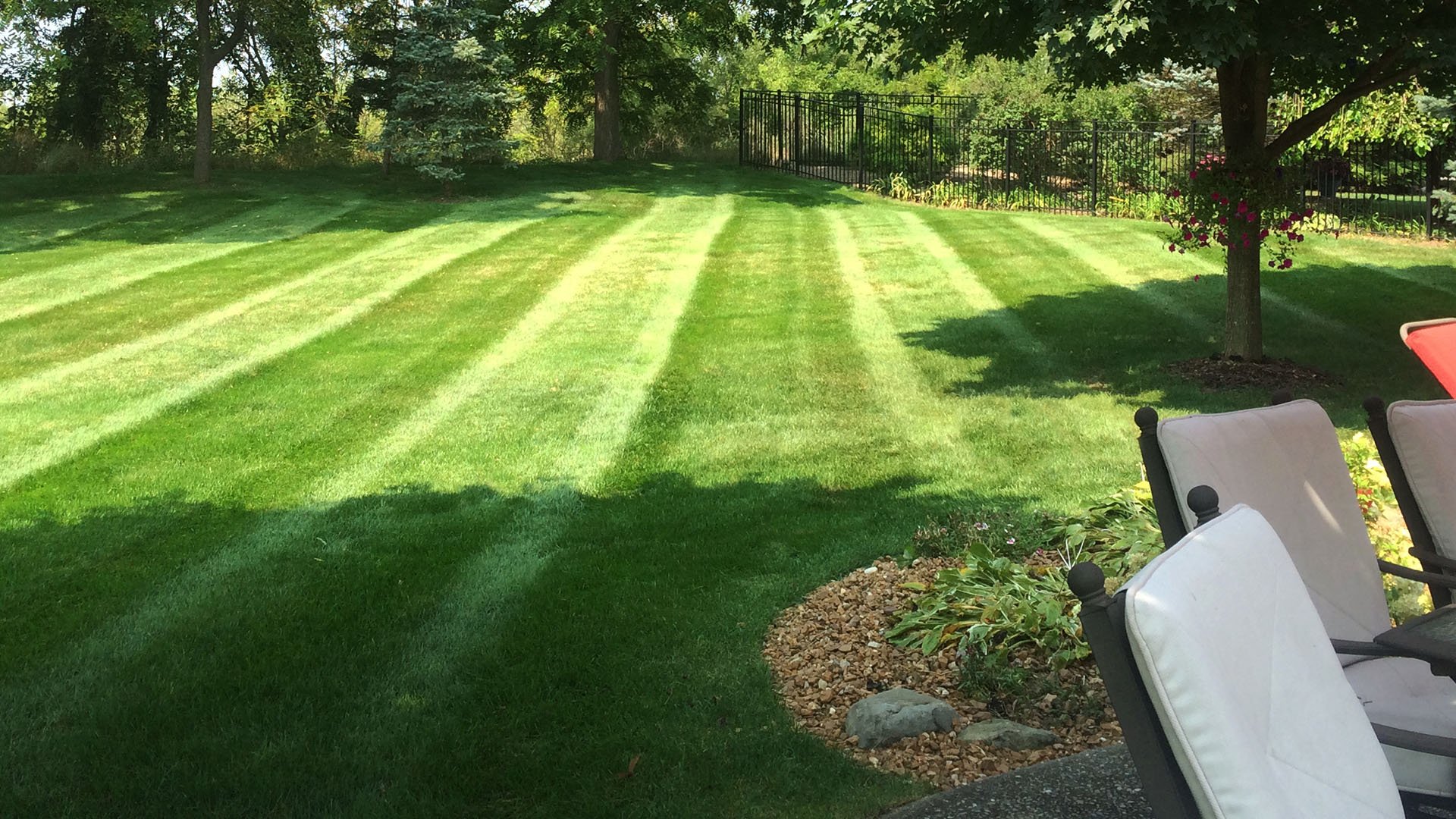
Every August our phone rings with the same frustration. The lawn has been on a program all season, the invoices are paid, and the turf still looks thin, pale or blotchy next to the neighbor's.
Lawn fertilization in Livonia, MI, does exactly what it promises: it supplies the nitrogen, phosphorus and potassium a grass plant needs to build green tissue and thicken. What a bag of fertilizer does not supply is air in a compacted root zone, a workable soil pH, a mowing height that protects the crown, or water that soaks past the top inch. When one of those is the limiting factor, the nutrients sit unused and the lawn keeps underperforming.
Brent Teddy founded this company in Livonia in 1994 and still runs it as a family business, with his wife Terece joining in 2002. Our team is Landscape Industry Certified and has spent more than thirty years reading Wayne County and Oakland County soils, which run heavy in clay and drain slowly. That history is why our first move on a struggling lawn is a diagnosis rather than another application.
This article goes deeper into the turf itself: the eight conditions that cap results, how to spot each one in your own yard, and what our crews change once we know which one is holding the grass back.
Related: How to Choose the Best Lawn Fertilization Service in Bloomfield & West Bloomfield, MI
How Long Does Lawn Fertilizer Take to Work?
On a healthy, moist lawn, a granular application shows color in seven to fourteen days and density over four to six weeks. Quick release nitrogen greens the blade within a week. Slow release nitrogen, which our program leans on through a Michigan summer, feeds over six to eight weeks without the surge that stresses a plant in July.
That timeline is the useful diagnostic. If three weeks pass after a properly timed application and nothing changes, the fertilizer is generally not the variable.
A heavier rate usually makes it worse by pushing top growth on a root system that cannot support it. Our fertilization and weed control program is adjusted against what the lawn shows us between rounds.
Why Does a Fertilized Lawn Still Look Thin and Patchy?
Because fertilizer only removes one constraint. Turf responds to the tightest limit on the site, and in southeast Michigan that is usually soil compaction, thatch, soil pH outside the usable range, mowing height, irrigation coverage, shade, insect or disease pressure, or a grass type that was wrong for the site the day it went in.
Homeowners cycle through three or four providers looking for a better product, and the product is rarely the difference. Two lawns on the identical program four houses apart look nothing alike if one sits on stripped builder subsoil and the other on eight inches of topsoil.
The rest of this guide walks those eight limits in the order we check them, with the field test for each. Most Livonia lawns carry two or three at once.
Does Soil Compaction Cancel Out a Fertilization Program?
It comes close. Compacted clay squeezes out the pore space that holds oxygen and water, and roots stop extending into it. Nutrients stall two or three inches down with nothing below to absorb them, and the grass lives on a shallow mat of roots that dries out fast in August.
How to Test for Compaction in Your Own Yard
Push a long screwdriver into the lawn two days after a soaking rain. In healthy soil it slides in six inches under hand pressure; if it stops at two, the root zone is compacted. Thin turf along traffic paths and water that sheets off after a storm point the same direction.
The correction is core aeration, not a heavier feeding. Pulling plugs opens channels for air, water and the fertilizer already on the surface. On heavy clay lots we often recommend two passes a season, and we pair the fall pass with overseeding so seedlings drop into open holes rather than onto a sealed surface.
What Soil pH Does a Michigan Lawn Need?
Cool season turf performs between roughly 6.0 and 7.0, with 6.2 to 6.8 as the target our team works toward. Outside that band the nutrients stay in the soil and go chemically unavailable. Iron and manganese lock up as pH climbs, a common reason a well fed Livonia lawn looks yellow green instead of deep green.
Local conditions push pH both directions. New construction lots often carry limestone dust and concrete washout in the backfill, which drives readings alkaline, while older properties under established pines tend to acidify. Neither shows from the driveway, so we pull soil samples rather than guess.
Correction is slow and worth starting now. Pelletized lime raises a low pH over one to two seasons, elemental sulfur brings a high reading down on a similar schedule, and retesting every two or three years keeps the program honest.
Thatch: The Layer That Keeps Fertilizer Above the Root Zone
Thatch is the spongy band of living and dead stems, crowns and roots that builds between the green blades and the soil surface. A quarter inch is useful insulation. Past about half an inch it acts like a sponge on a roof: granules land in it, irrigation wets it, and little of either reaches the roots.
Cut a small wedge with a spade and read the profile from the side. The brown fibrous band between green growth and dark soil is your measurement.
Thatch builds fastest where compaction has slowed the soil biology that breaks it down, so we treat the two together. Core aeration handles moderate accumulation; heavier layers get mechanical dethatching, which our crews schedule alongside spring and fall cleanups.
Is Your Mowing Height Working Against the Fertilizer?
Often, yes. Cool season grass in Michigan wants three to three and a half inches through summer. Blade length drives root depth almost one for one, so a lawn scalped to two inches carries a root system half as deep as it needs and cannot reach the nutrients applied for it.
Short turf also lets sunlight reach bare soil, the trigger crabgrass seed waits for, and homeowners then read the weed pressure as a pre-emergent failure when the real cause was deck height. Follow the one third rule: remove no more than a third of the blade per cut.
Blade sharpness matters as much as height. A dull blade tears the leaf tip, and torn tissue turns straw colored within a day or two, which reads as drought stress. Our mowing crews run the same property the same day each week with sharpened blades and a set height, so the feeding side of the program is not fighting the cutting side.
How Much Water Does a Lawn in Livonia, MI, Need in August?
Roughly one to one and a half inches per week, rainfall included, in two or three deep cycles rather than a daily sprinkle. Shallow daily watering trains roots to stay near the surface and undoes much of what a summer feeding was meant to build. Set tuna cans out to measure what your system puts down.
Coverage is the piece most homeowners skip. A clogged nozzle, a head knocked out of alignment, or a zone designed before a hedge matured leaves a dry arc that no amount of fertilizer corrects. Those arcs have hard edges and repeat in the same shape every summer, which is how we separate them from disease.
Water between four and eight in the morning so blades dry before evening, since overnight irrigation holds the canopy wet and invites fungal pressure. Our irrigation team audits head spacing, pressure and run times, and small adjustments there frequently do more for color than an extra round of product.
Do Grubs or Lawn Disease Explain a Sudden Decline?
They explain the fast collapses. European chafer and Japanese beetle larvae are established across southeast Michigan and feed on turf roots through late summer, the same window a fertilized lawn should look its strongest. Grab a handful of declining turf and pull. If it lifts like a loose rug with no roots attached, that is a grub problem, not a nutrition one.
Cut a one foot square and count. Six to ten larvae is the treatment threshold on most home lawns, and skunks tearing up sod at night are doing the census for you. Our outdoor pest control programs treat the larval stage preventively rather than chasing damage in September.
Telling Disease Apart From Drought
Red thread, dollar spot and brown patch move through Michigan lawns in warm, humid stretches. Disease shows as irregular patches with distinct margins, and individual blades carry lesions or banding. Drought browning is broader, follows sun exposure, and recovers after a soaking. Nitrogen applied into active disease feeds the pathogen, so we treat the disease first.
Will Grass Grow Under Mature Shade Trees?
Thin turf under a mature maple or oak is rarely a feeding problem. Grass needs about four hours of direct or filtered light a day to hold density, and a closed canopy delivers less. The tree also wins the contest for water and nutrients, because its feeder roots occupy the same six inches of soil.
Three honest options exist. Thin the canopy so more light reaches the ground, switch that zone to fine fescue, which tolerates shade better than bluegrass, or convert the area to a mulched bed. Our tree and shrub care team handles the pruning, and crown thinning done correctly changes light levels for several years.
That third option is often the strongest under old growth trees. A defined bed with a clean edge and fresh mulch installation ends the annual reseeding cycle and protects surface roots that mowers keep wounding.
The Wrong Grass for the Site Will Not Feed Its Way Out
Most subdivision lawns around Livonia went in as Kentucky bluegrass sod, a fine choice for open sun and irrigated ground. It struggles on dry slopes, in dense shade and in compacted clay side yards, and no program corrects a species mismatch.
Turf type tall fescue has become our workhorse on tough sites, because it roots deeper and holds color through a dry August on less water. Fine fescue takes the shaded zones, and bluegrass keeps the open, irrigated ground where it performs.
The practical route is fall overseeding into aerated soil, which establishes a stronger species inside the existing lawn over two or three seasons instead of a full tear out. Late August into September is the Michigan window, and it pairs with the fall round of a residential fertilization program.
How Our Team Diagnoses a Livonia Lawn Before Changing the Program
A diagnosis visit takes about an hour and follows the same order every time. We walk the property with the homeowner first, because the history matters: when the sod went in and which corner has been a problem since day one.
Then come the physical checks: a screwdriver probe in several zones for compaction, a spade wedge for thatch and rooting depth, soil samples at multiple points for pH and organic matter, deck height measured on the standing grass, and an irrigation run to watch coverage and head alignment.
Light exposure gets mapped across the day, and any patch with defined margins is pulled apart by hand to separate insect damage from disease. Only then do we write the program. Just as often as a schedule change, the answer is aeration, a mowing height correction and two irrigation adjustments, with the feeding left alone.
That sequence sits inside our broader landscape maintenance work, so the crew mowing your property each week reports back to the technician making the applications. Splitting those functions between two companies is a quiet reason lawns stall.
Why a Professional Lawn Team Reads a Lawn Differently
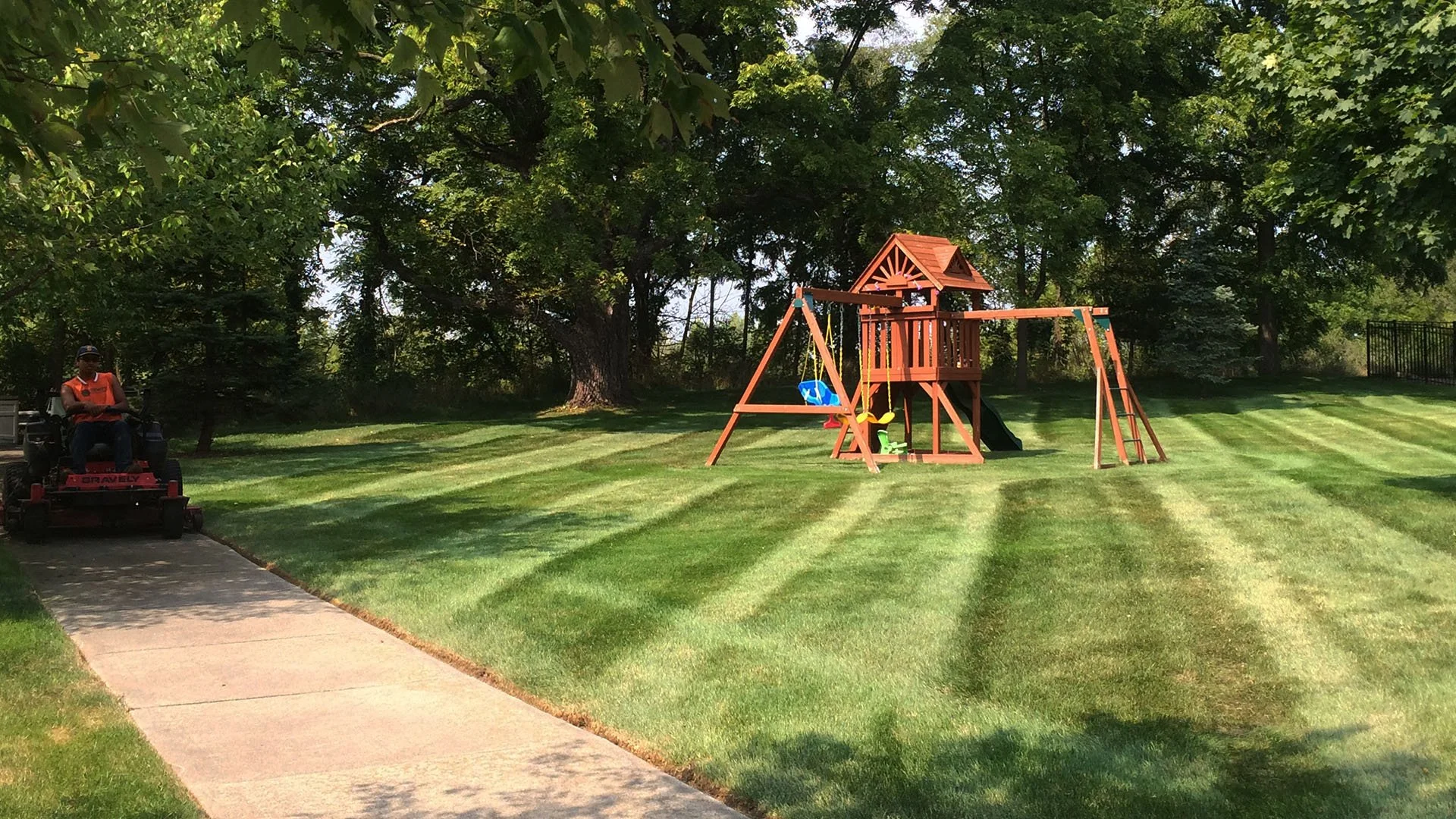
A homeowner sees color. A technician sees a system with eight inputs and reads which one is short, which is why a lawn that resisted three seasons of product often turns around in one once the real limit is gone. Licensed applicators also carry the parts that matter beyond appearance: correct rates, timing against Michigan growing degree days, phosphorus rules, and posting requirements around children and pets.
Book a Lawn Diagnosis in Livonia, MI
If your lawn has been fed all season and still looks tired, the next step is a diagnosis rather than another product. Our technicians walk the property, run the field tests above, and give you a written plan naming which limit is holding the grass back.
Reach out through our contact page to schedule a lawn evaluation at your Livonia property. We have been diagnosing and feeding southeast Michigan turf for more than three decades, and we would rather fix the cause than sell another round.
Ask us about lawn fertilization, aeration and overseeding this fall with Teddy's Lawn & Landscape.
In Summary: What Actually Fixes a Lawn That Fertilizer Has Not
My lawn has been fertilized all season and still looks bad. What should I check first?
Compaction and mowing height, in that order. Both are quick to test, both are common on Livonia properties, and both cap the response to every application you have paid for. A screwdriver probe and a tape measure answer the question in ten minutes.
Should I stop fertilizing while we fix the other problems?
Fertilization stays in the program while other problems get fixed, since the grass needs those nutrients to recover once the limiting factor is cleared. What changes is the timing, the rate, and what gets added alongside it: aeration, a pH correction, an irrigation adjustment or a species change.
How long until a diagnosed lawn looks better?
Mowing and irrigation corrections show within two to three weeks. Aeration and overseeding show over a full season, and a pH correction runs one to two. Grub or disease treatment stops the loss immediately, and the turf fills back in over four to eight weeks.
Related: A Fertilization Schedule Recommended by a Lawn Care Company in Green Oak Township & Beverly Hills MI